Theme Description – Still Water
Theme: Still Water
Still Water is made of three installations created in 2016. These works add to the cycle To Float from 2008 and Social from 2012. These themes depict a manipulated man who remains without identity in the process which is somewhere between life and death or in the state of levitation1. The concept of Still Water expresses the state of the process that is based in the core of male-female relations or the emotional manipulation representing the syndrome of imbalance, triviality, and sublimity.
Water as a synonim of life and a model of memory was taken as a symbol of change that turns the living into dying, good into bad, pure into filthy, etc. Such a transition into still water, which is determined by a model of stale, negative, murky, incomrehensable, belongs to a form of the same thematic frame equal to a man and life. The same elements that lead to manipulation are fear, guilt, pain, jealousy, conditioning, provocation, revenge, rage, anger, bitterness, ...
The tendency of the work is to get engaged with minimal interaction and present an emotion and experience, a period and a state in which two beings reside, questioning the values of the other in an attempt at egoistic subordination. The dramatic display of these works sets in a context the relations within a spatial overview through an emotional vortex along with the interior and exterior agents.
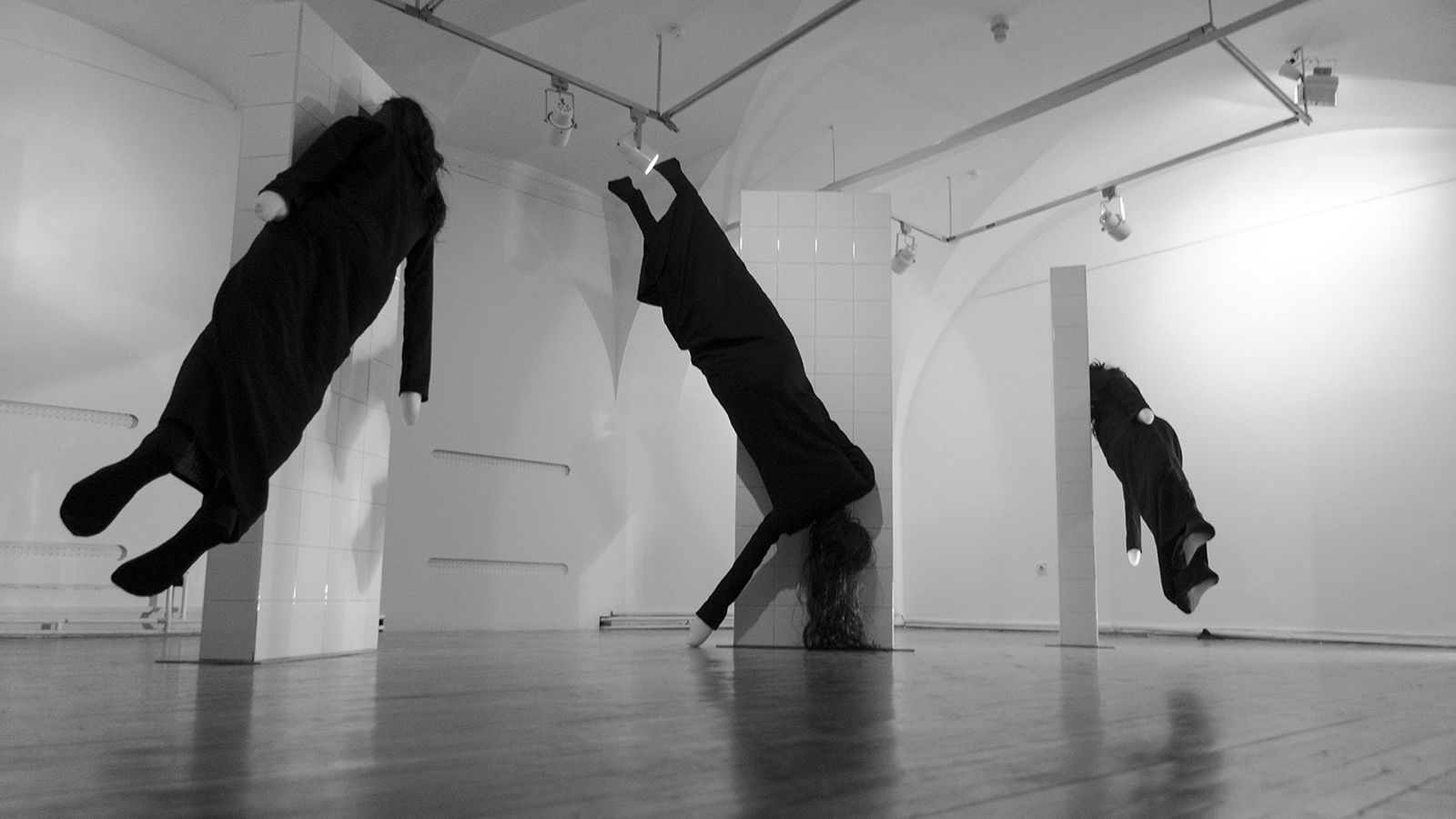
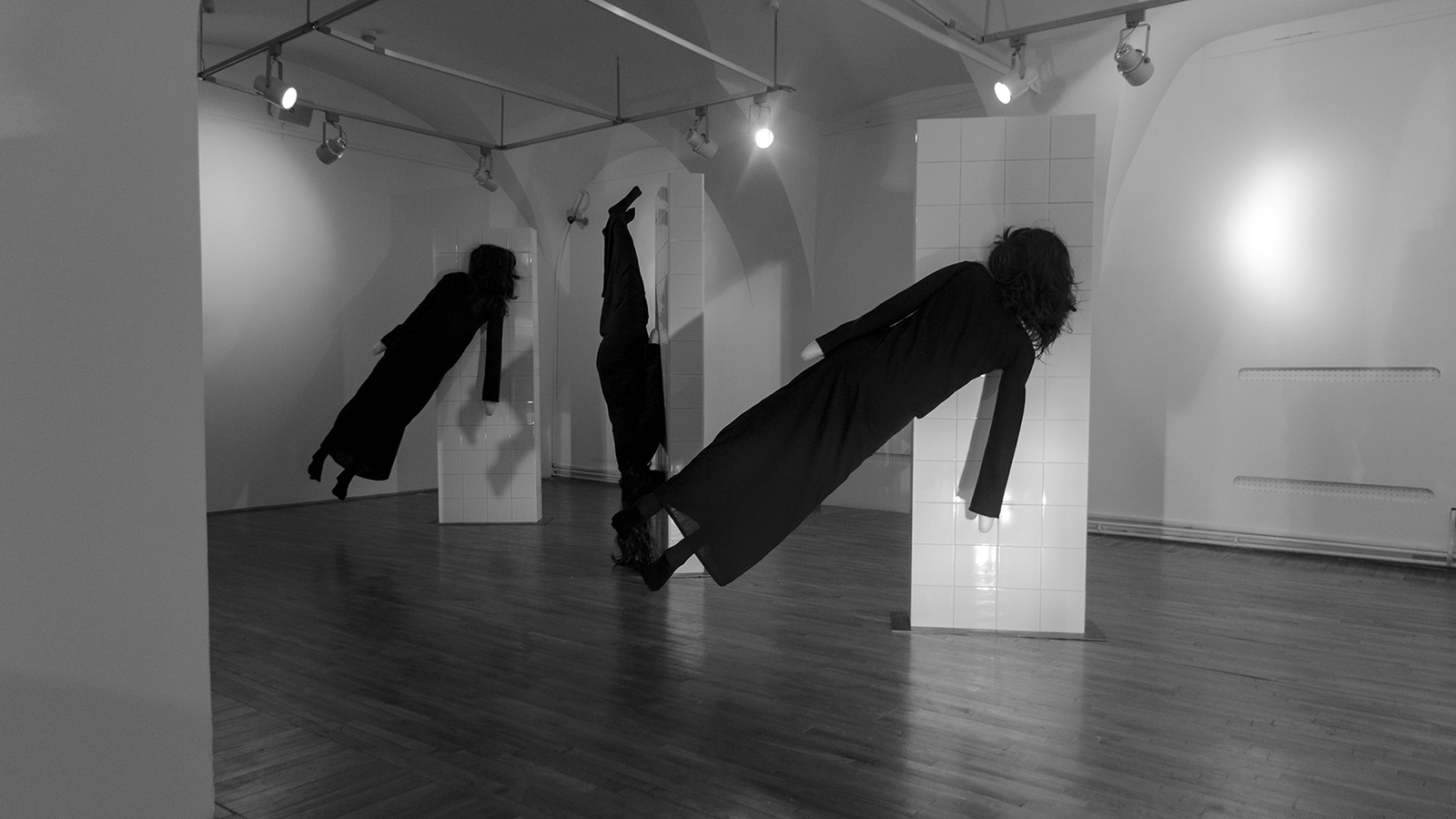
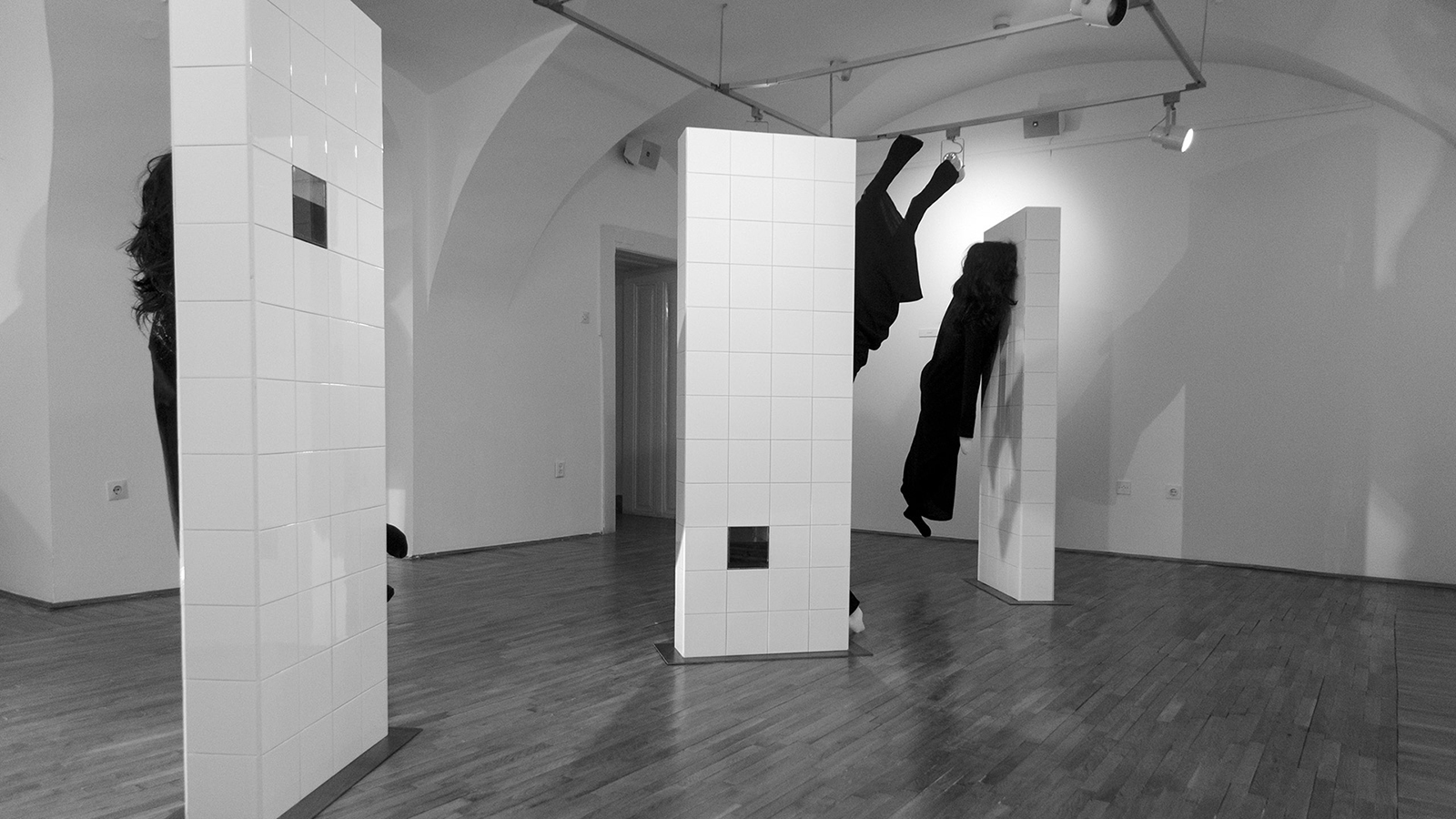
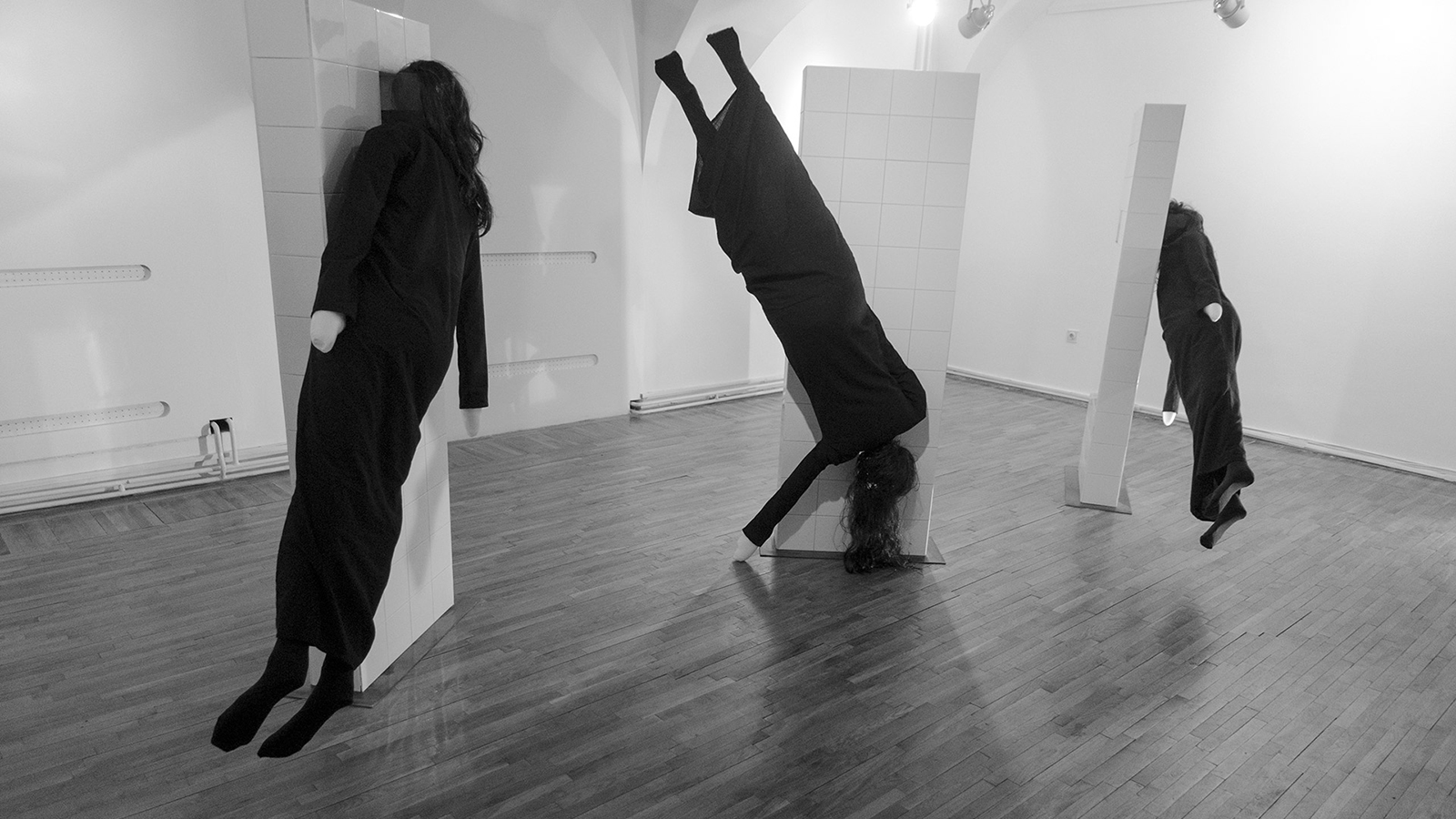
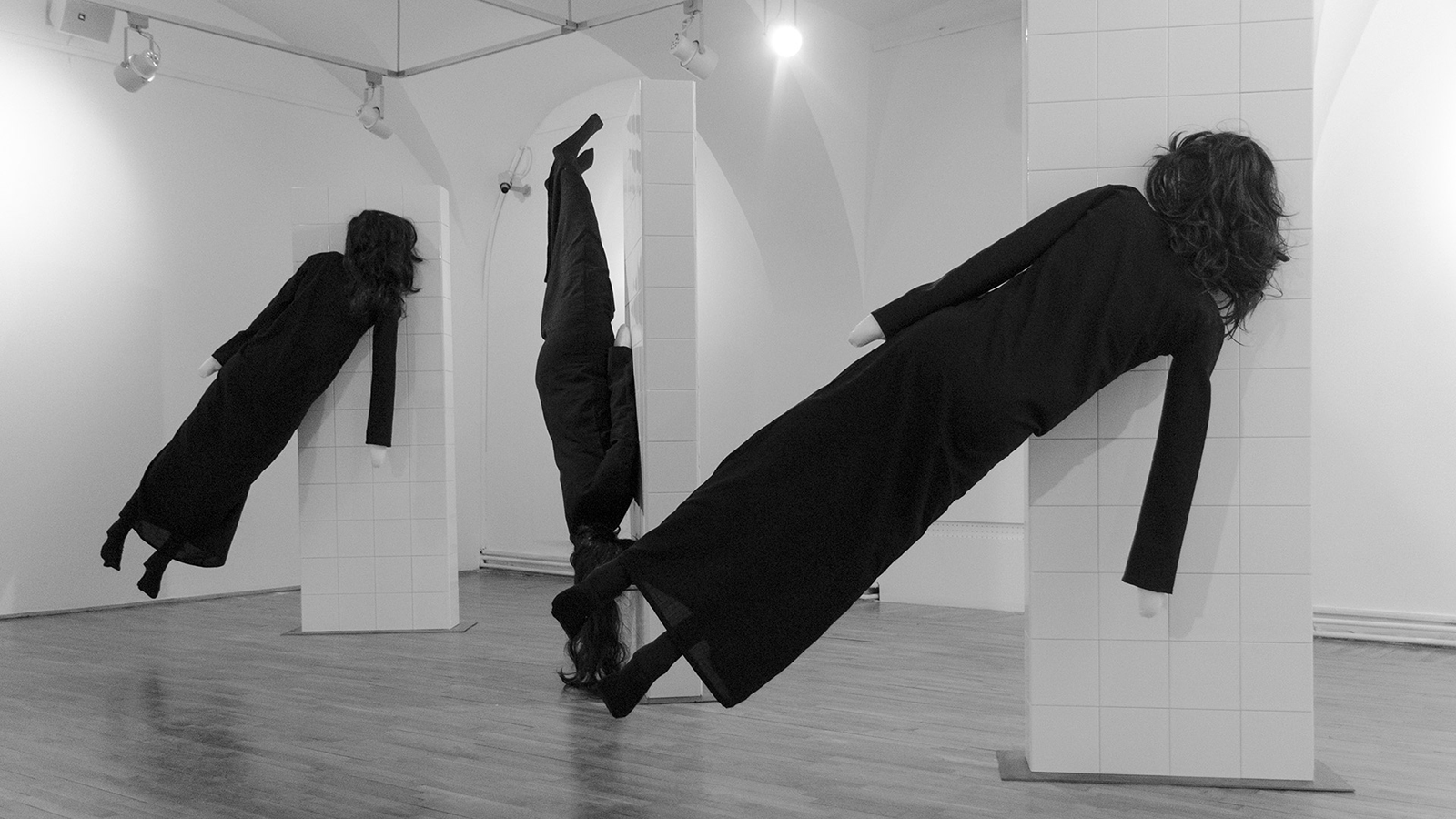
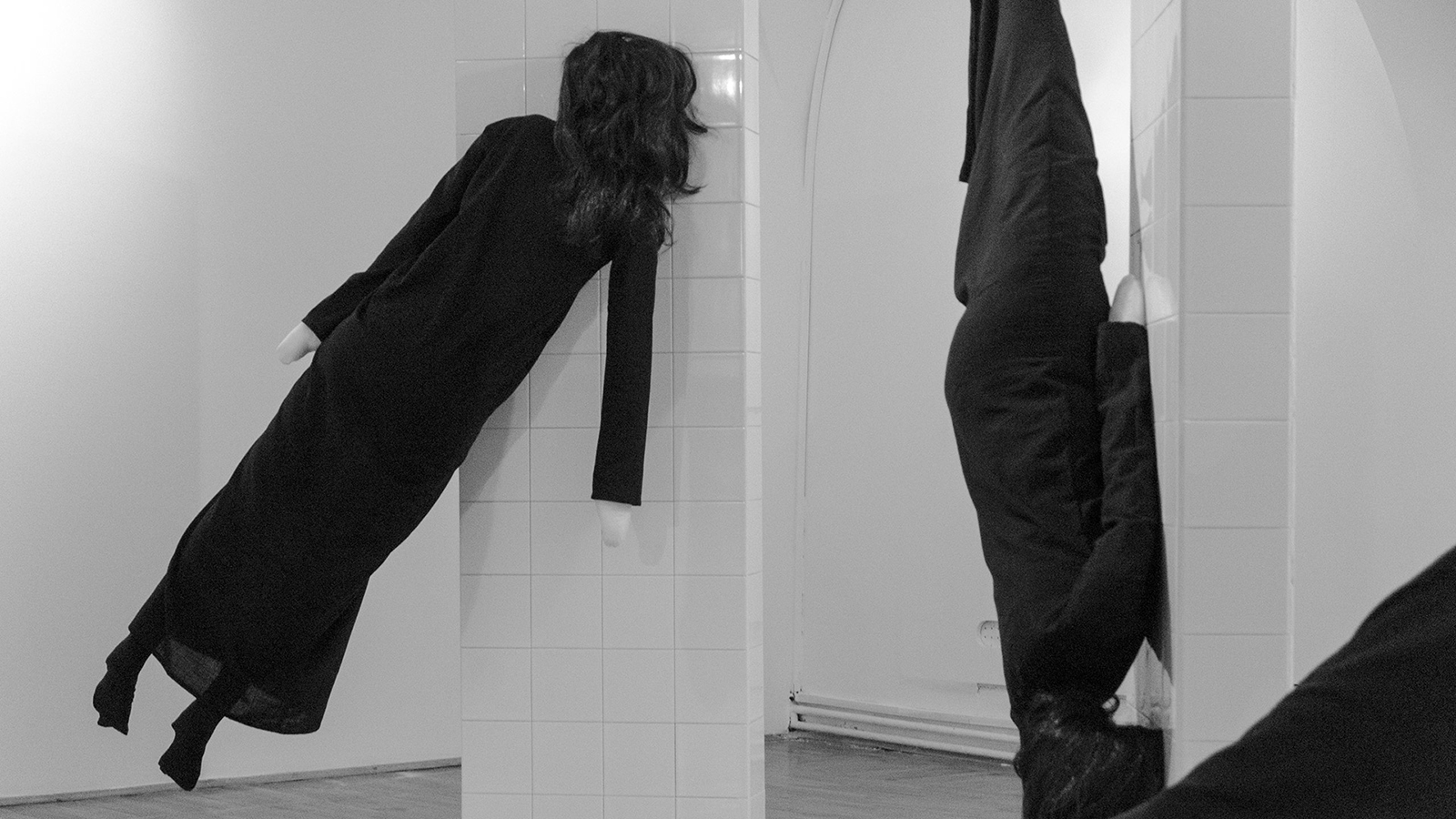
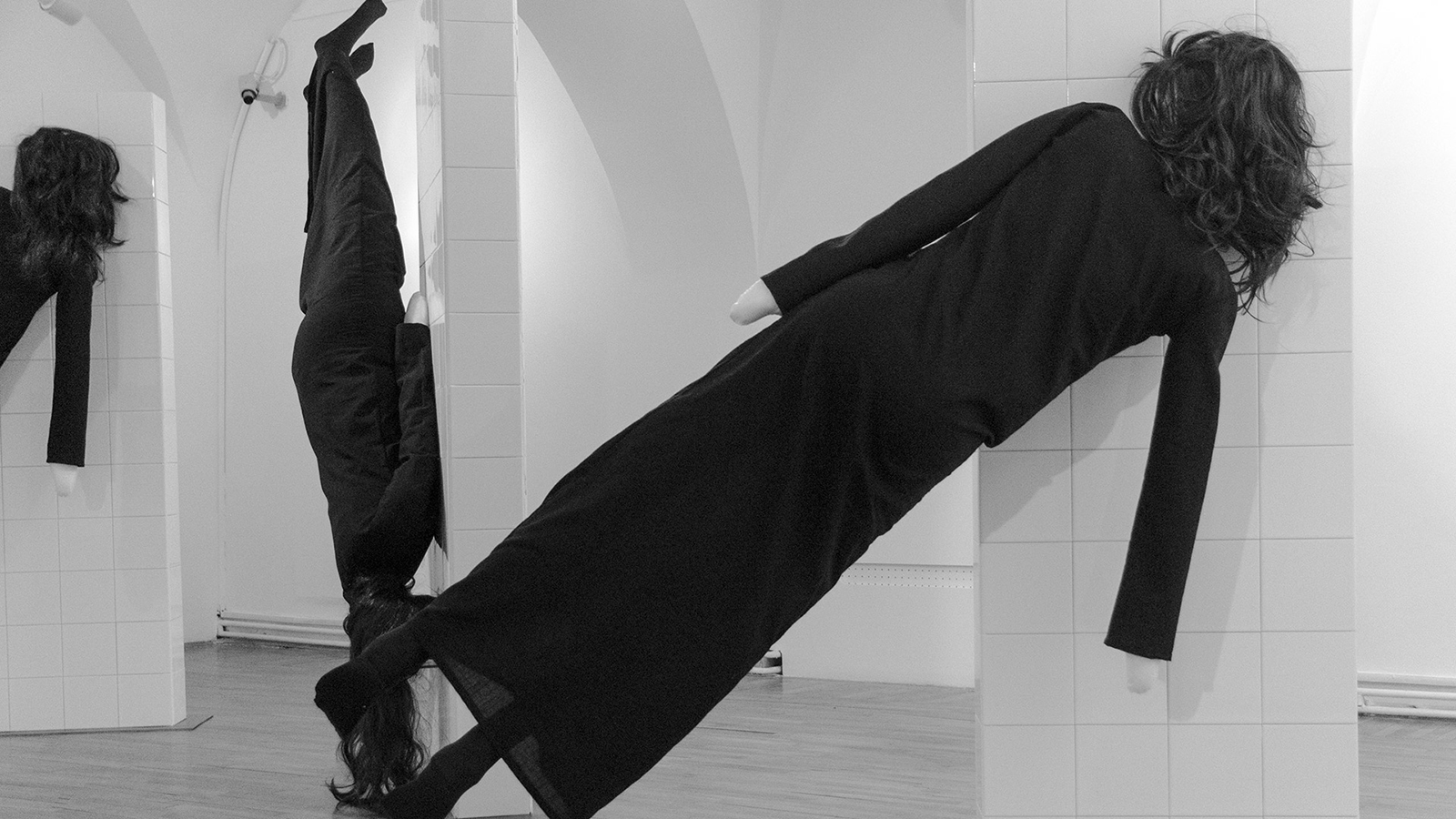
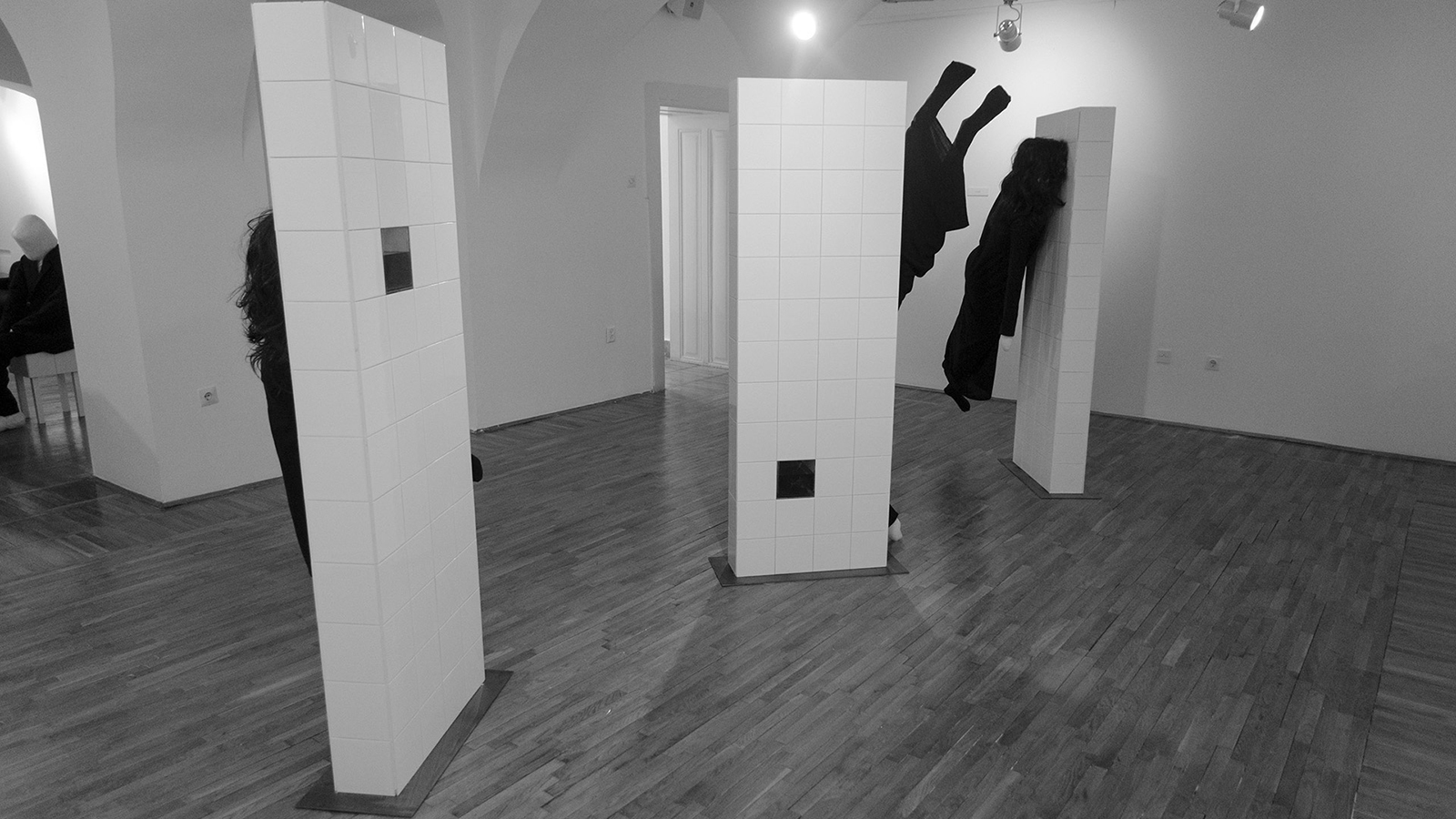
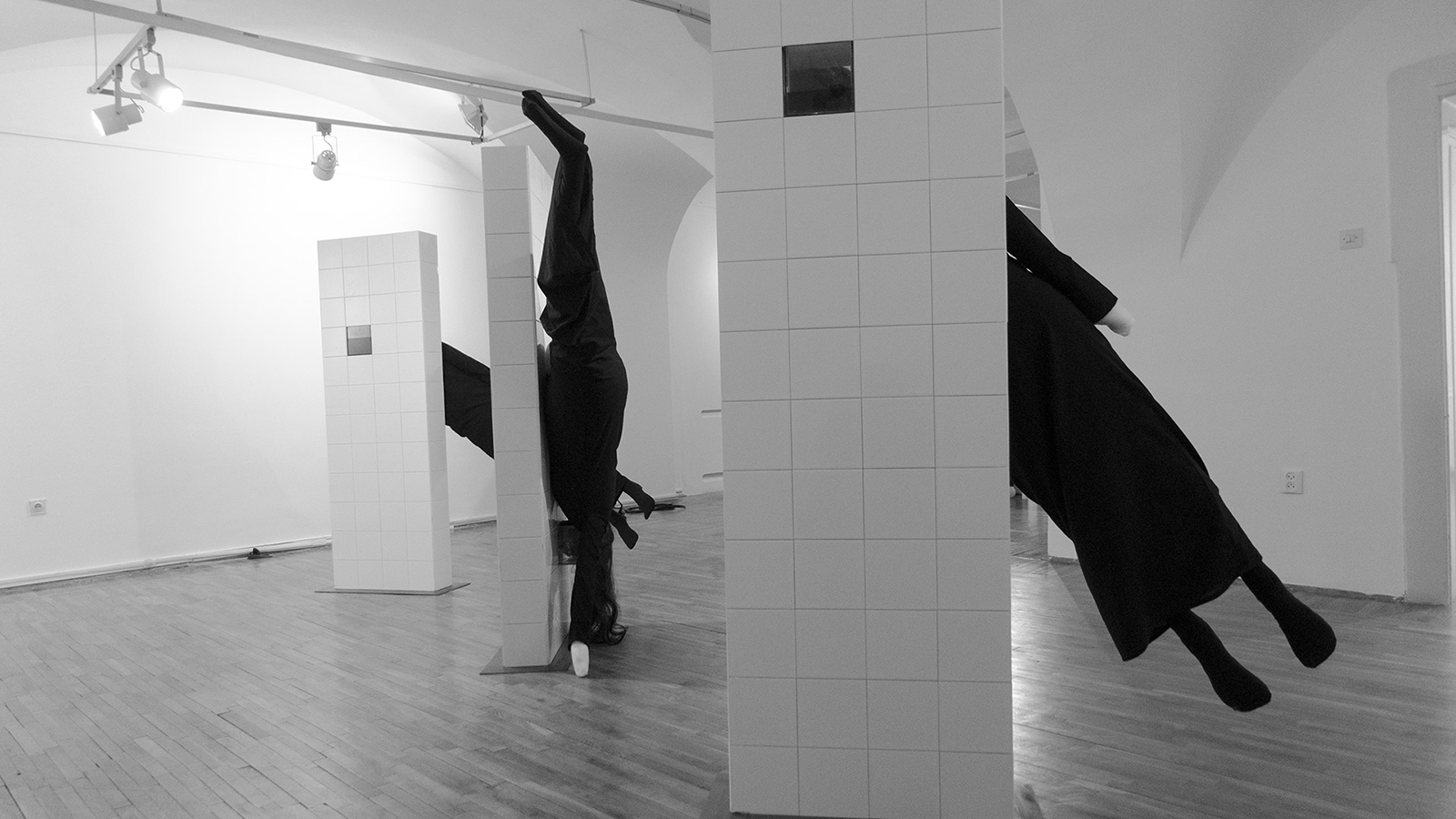
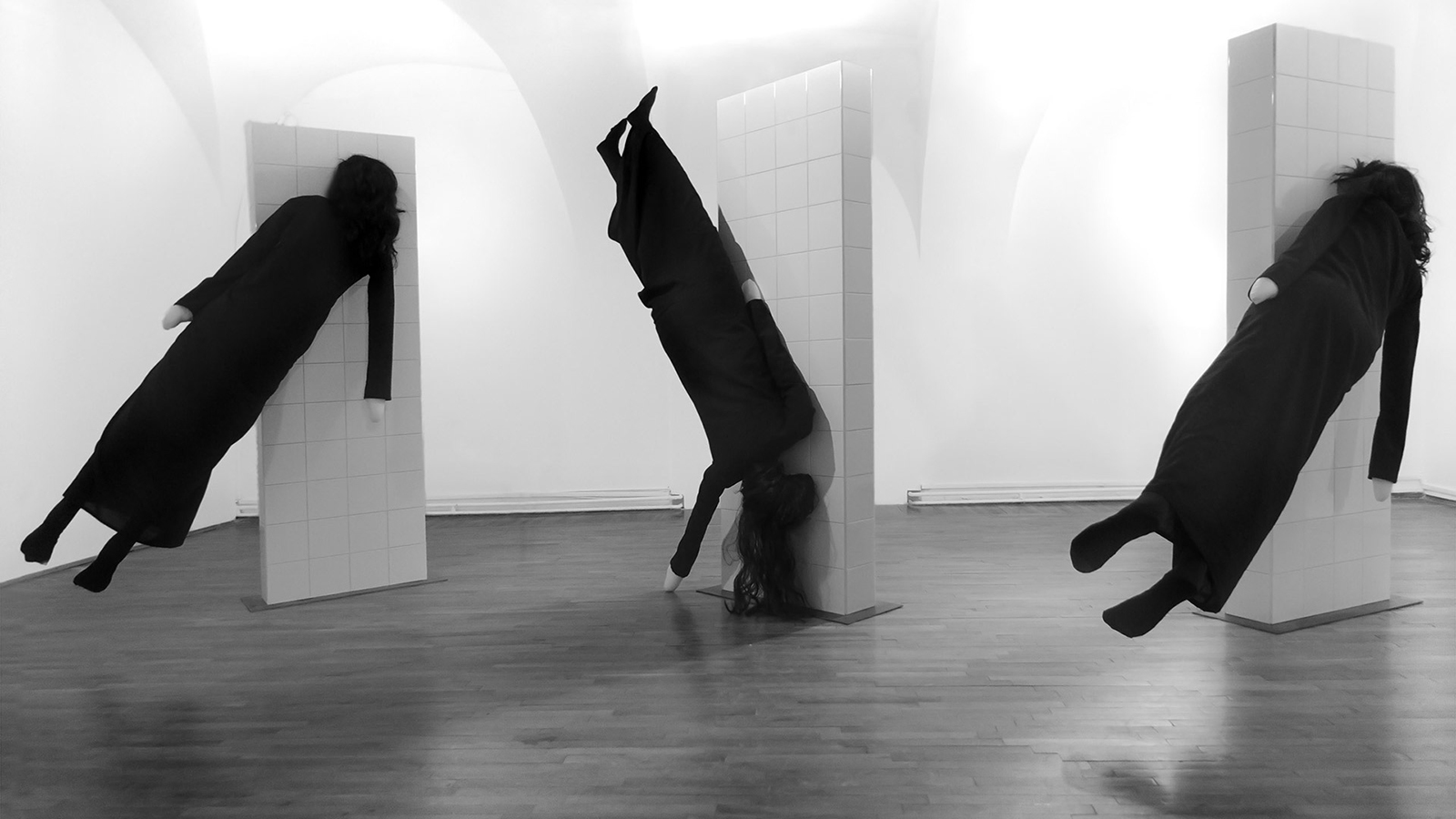
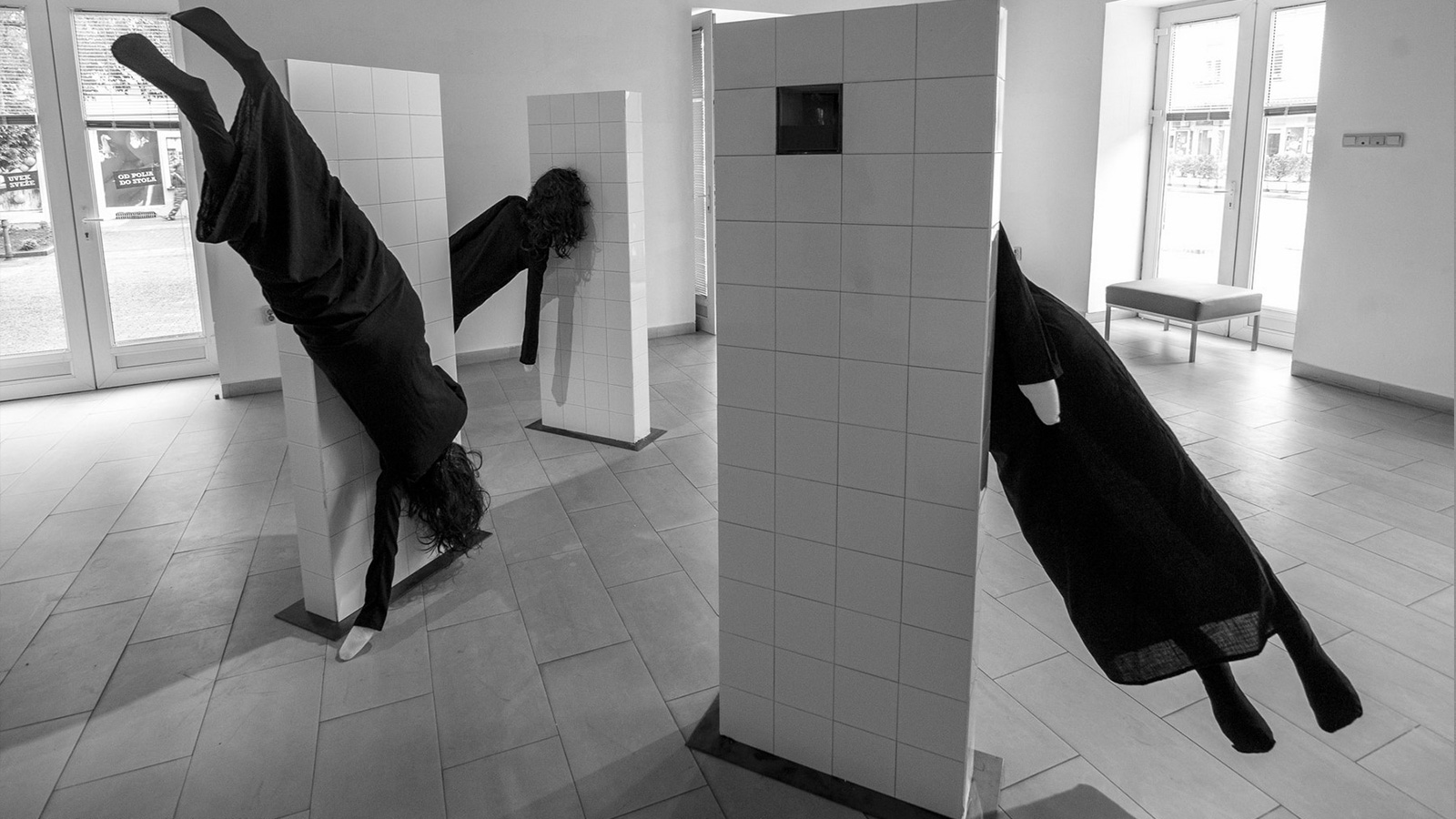
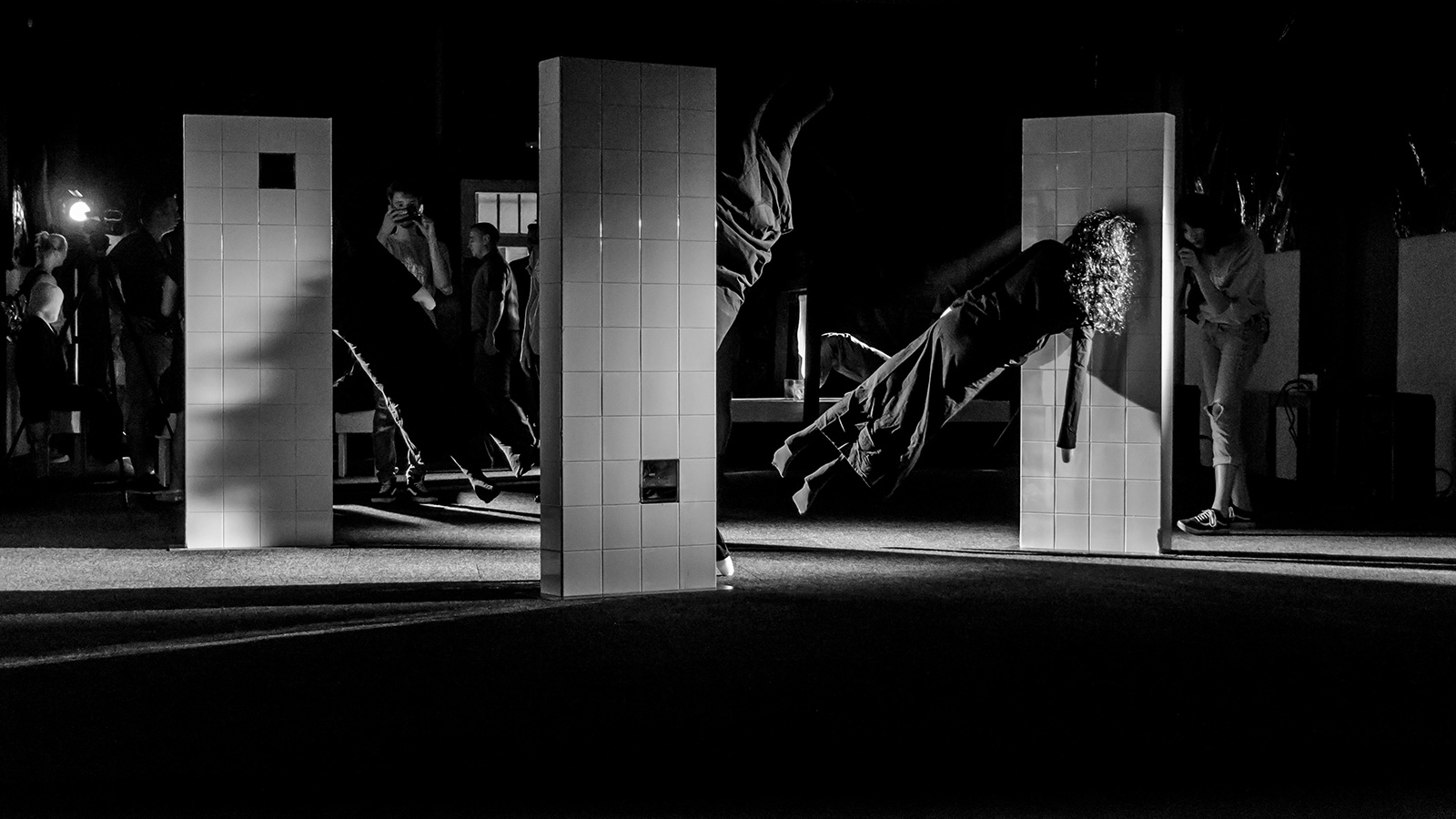
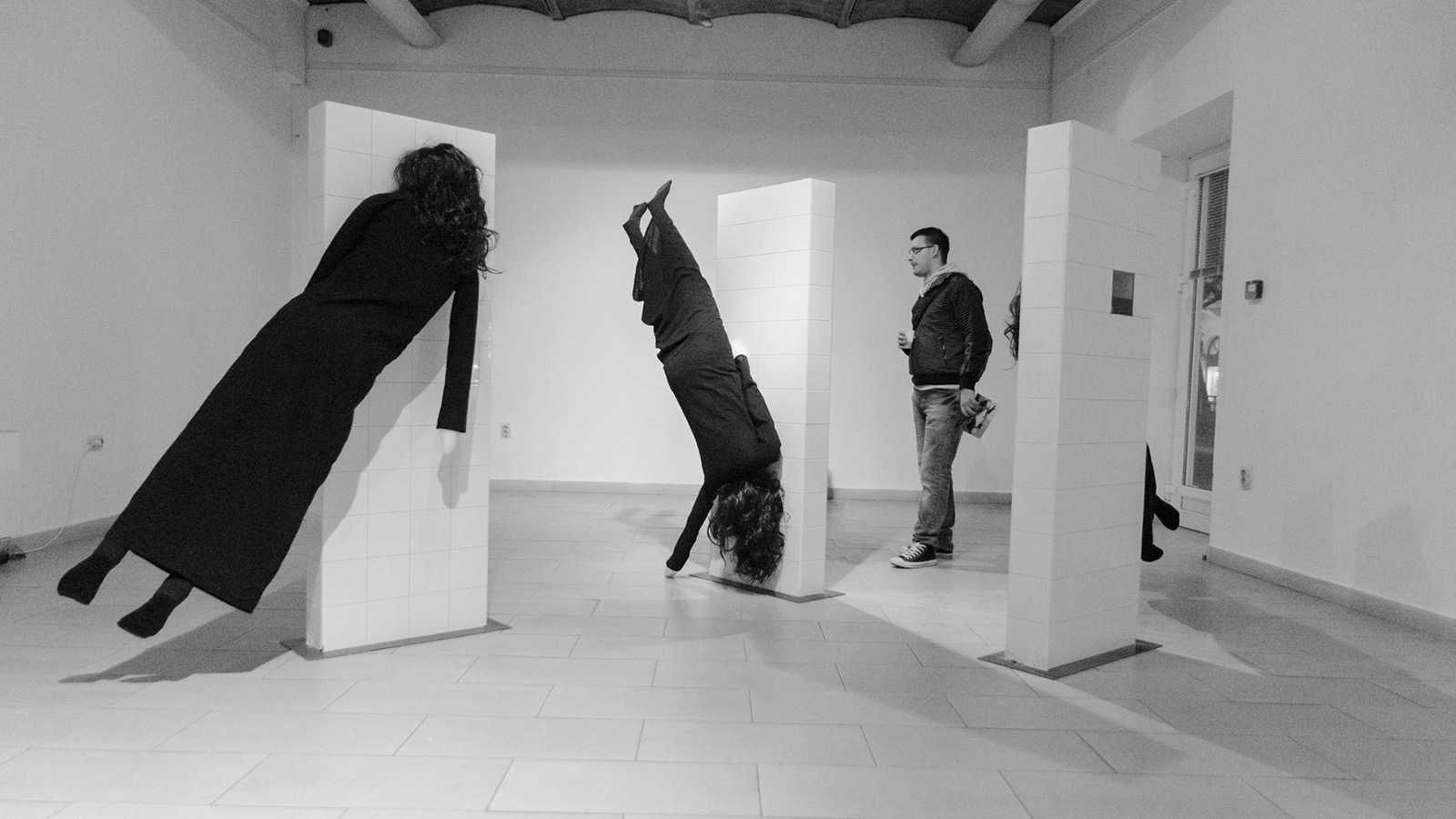
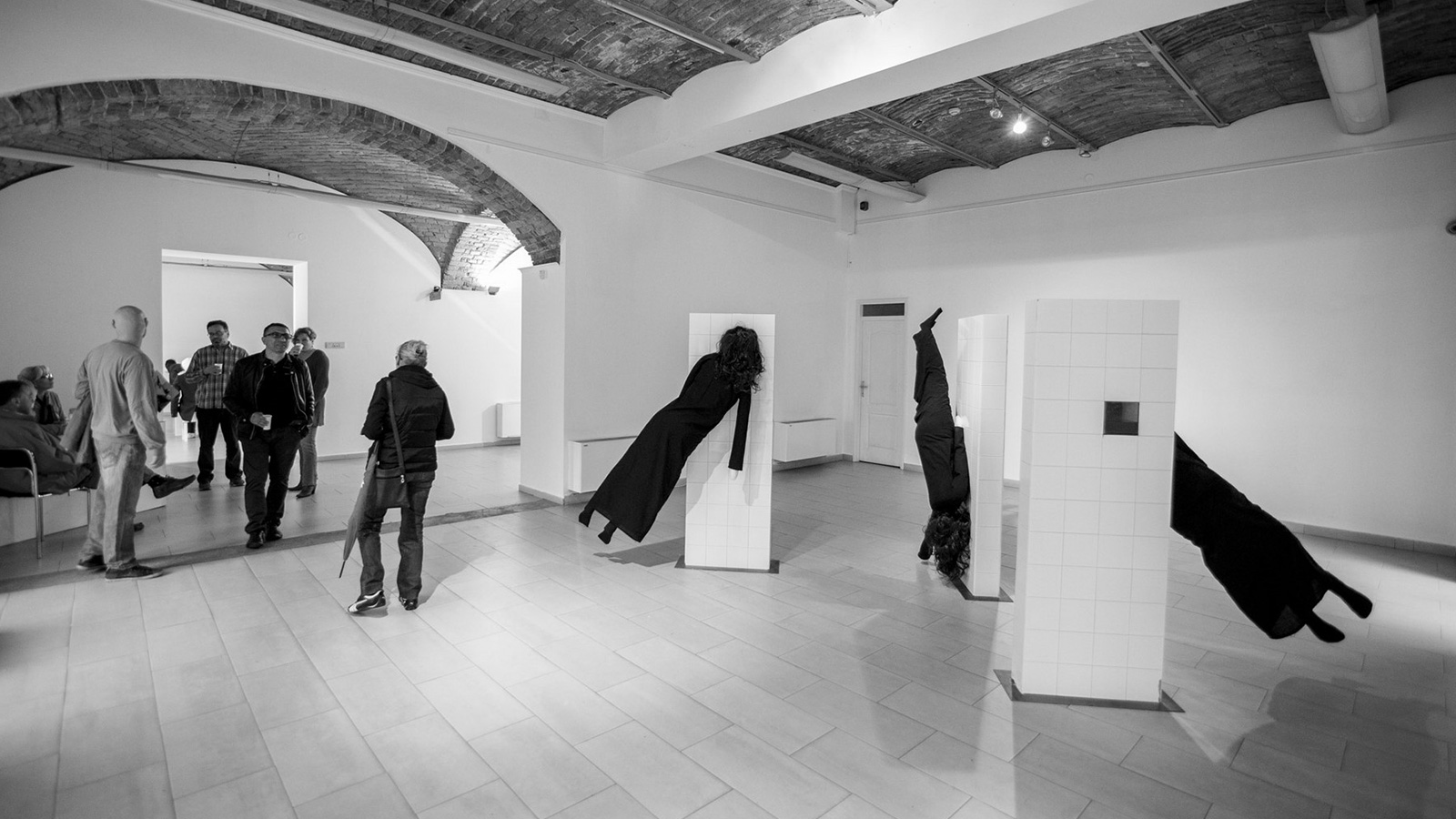
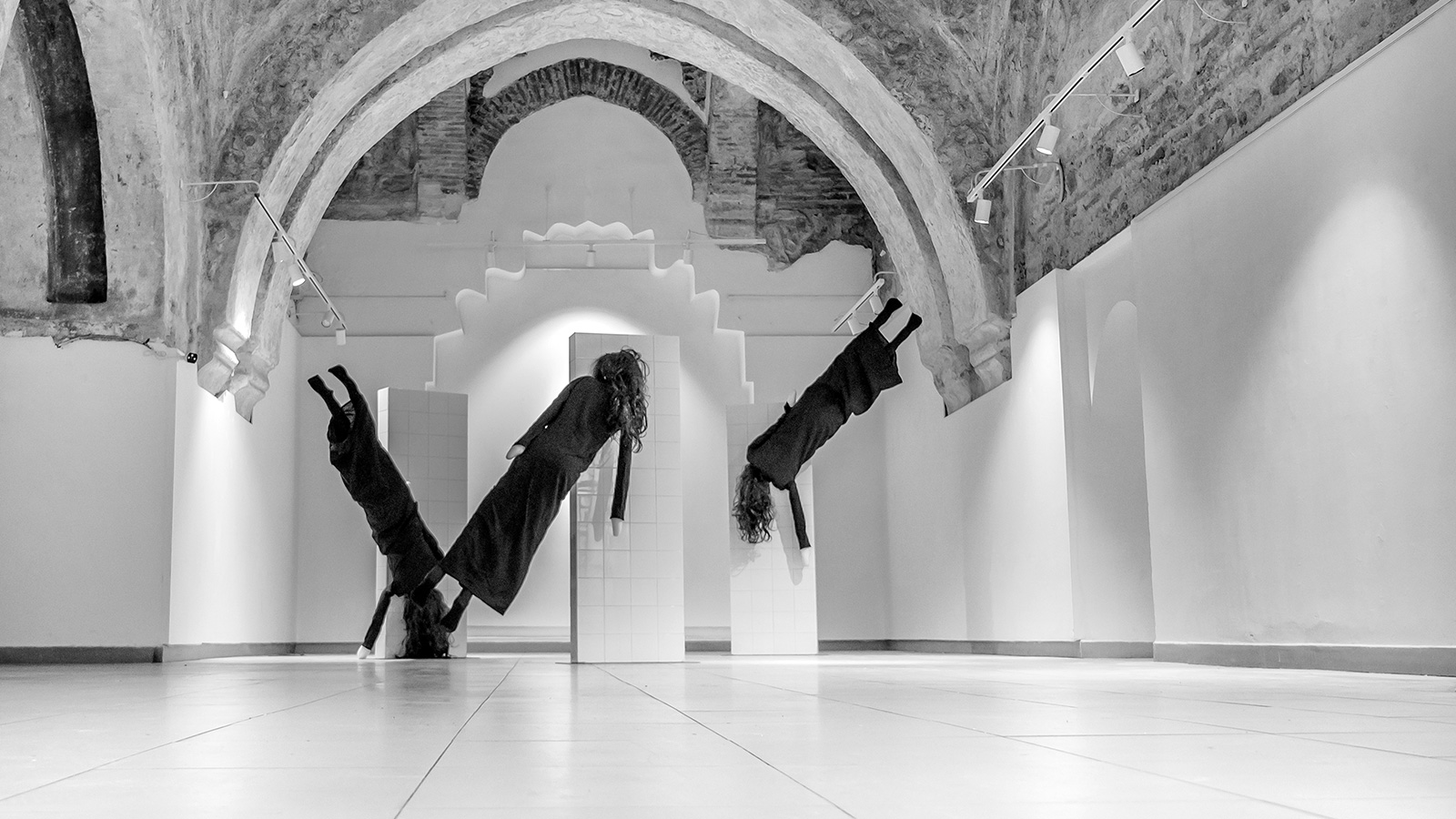
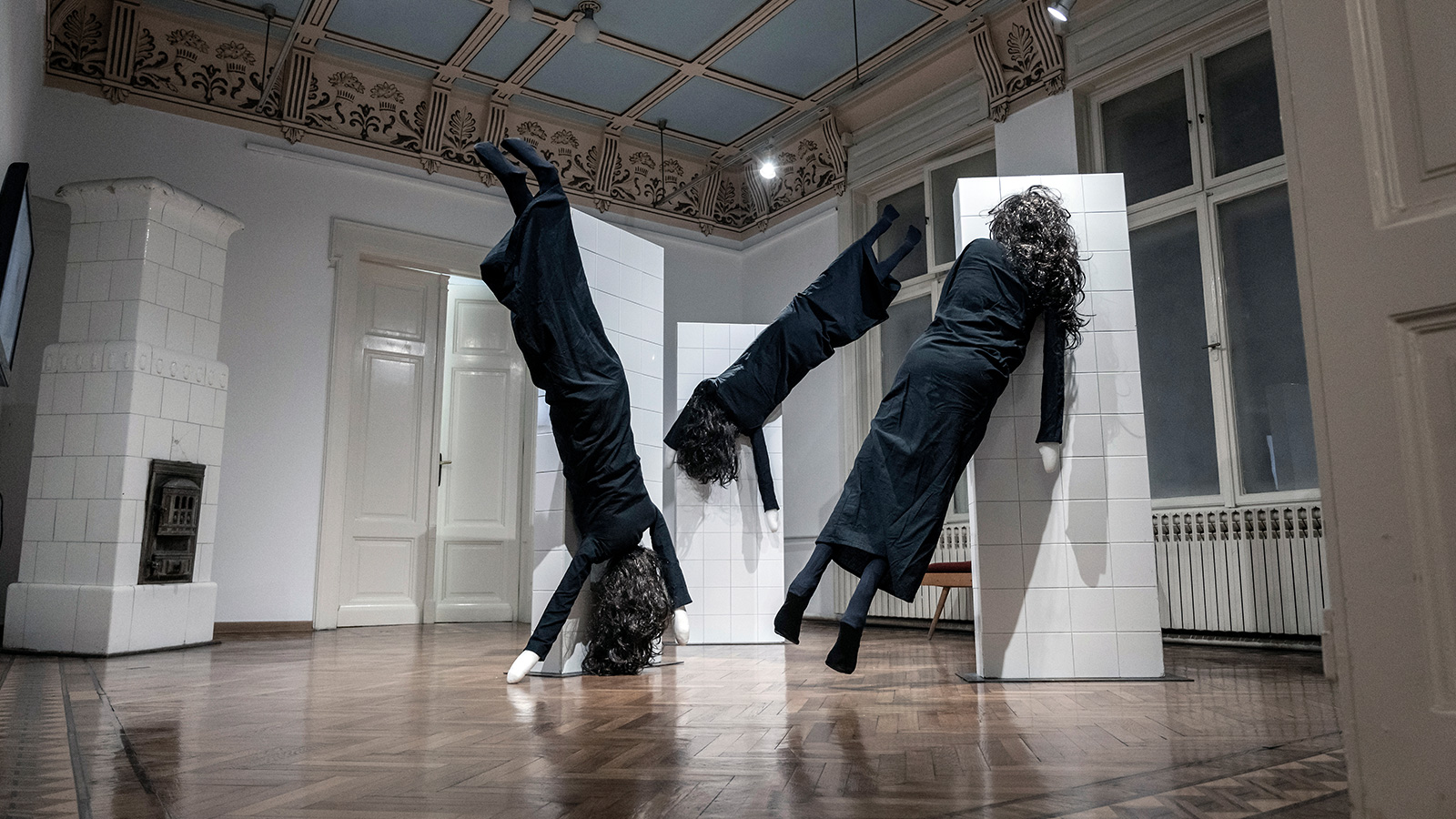
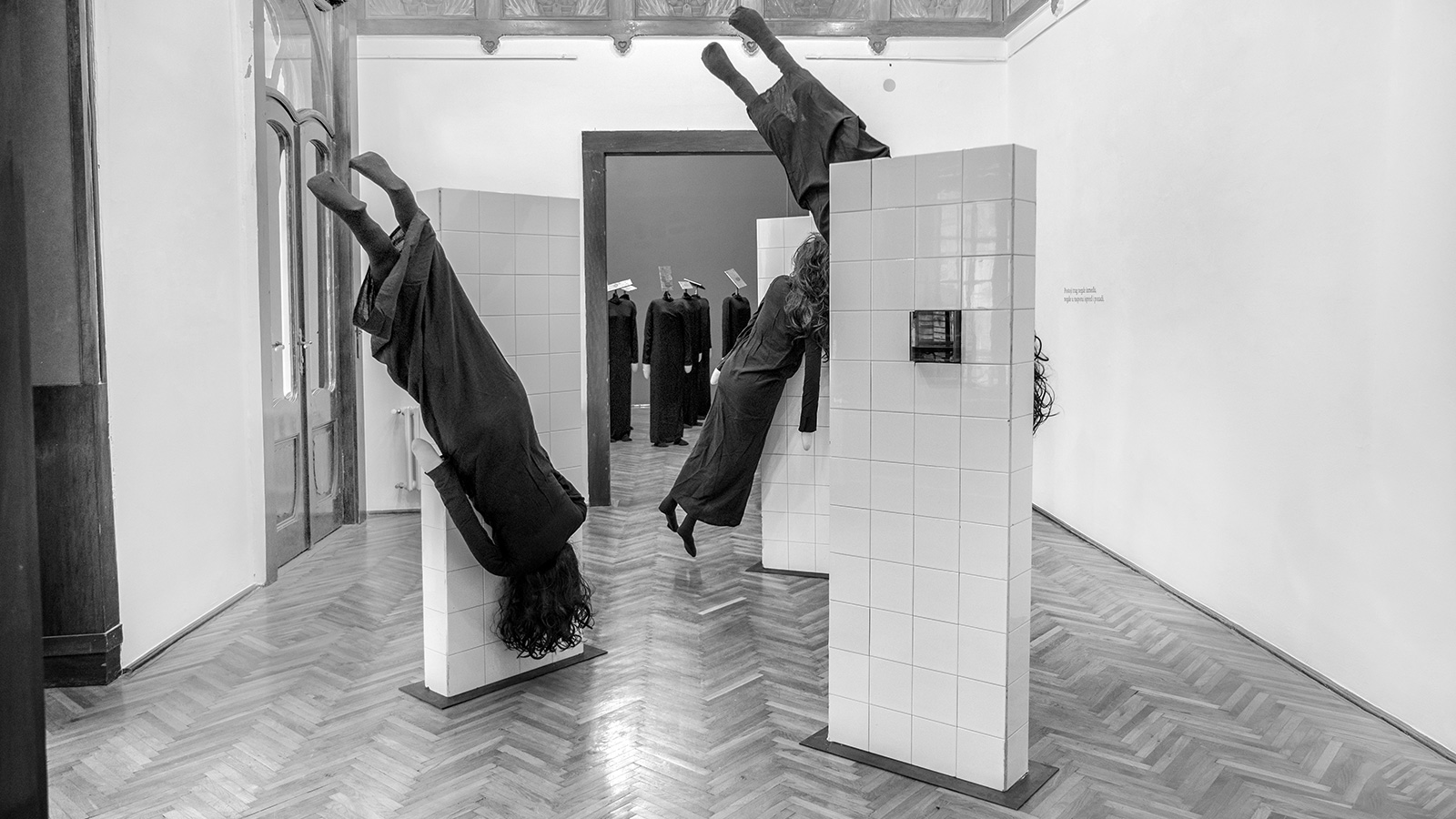
The Absence is set on three wall panels made of ceramic tiles. On each panel there is a female figure (dummy) in a different position and a water tank. The reflections of these positions imply movement and stagnancy, time, change, diversity and uniformity, supernatural posture which can signify inner turmoils and mental unease. Hence the illusion in an unaccomplished dynamics and aspects of benumbed and indifferent existence. The head of the female figure is replaced with a water tank containing an inanimate and stagnant still water. This water is a synonim for contrast of life and animate water. Female as a mother in this instance becomes the opposite. She is a distorted image. She acquired a new dimension of wrongdoing as a result of inner flows. Emphasized cleanliness on the panels made of white ceramic tiles represents an allusion to the pure, but actually is a display of gloominess and impurity. Black figures of a woman in levitating position and the water that has lost its primary property as a life substance become a paradoxical principle which we can identify with life principle in which everything becomes vague and everyone oscillates and wanders.
The Syndrome of Imbalance displays male figures (dummies) in a group, wearing classic suits, sitting at the table which represents a ritual site and a meeting place. One figure is in supernatural floating position that absorbs the state during an ascension in view of other static figures in a sitting position. The figure that is ascending uses both hands to grab at a filled up water tank which is lying on the table. The water from the tank is a bearer of numerous messages which bring this figure in such a state of absence in comparison to other figures at the table. The remaining three figures are static and still. They are the synonym for socialization and the witnesses to the fate of the fourth one. The water in the water tank is still, murky, and dead. It contains submerged messages of insult and humiliation which stand equal to the insults that can be exchanged between two close persons during a conflict. As a result the figure standing in a supernatural position expresses its spiritual unease, putting the imposing emphasis on itself as a convict, culprit and victim, humiliated and humble person. This figure in an ascending illusion disturbs the balance and symetry of the balanced scene and exemplifies the inner unstable rebellion and a tempest which are reflected through the posture of its movement.
The Irony is a representation of reduced geometrically defined bed made of white ceramic tiles. Around the bed there is a frame, crown or door, passage or exit. The frame divides the space into two parts. One part contains a dummy of a woman in a half-lying convulsive posture. The dummy is turned so as to express and convey the message which is silence and yet a word. This word “RUN“ might be trivial, but contextually strong. It is displayed on a screen made of a fabric submerged in a murky water tank. Murky water that is carried onto the wet cloth that contains the message “RUN“ is in connection with the figure of the woman in the background. It is her message that is delivered to someone who is physically absent or to a random subject – an observer. The work implies the irony of a relationship where the female attitude is expressed through an arrogant disruption of communication while the observer identifies with the target of the relationship through personal and endured.
1 Despotovski, G. “Sudbinski aspekti života“ (Destinate Aspects of Life), a seminar paper, The Academy of Fine Arts, Doctoral Studies of Art, Novi Sad, 2016. [The term I use for comprehensive understanding of such phenomenon, which includes an individual and which is the topic of the paper, is levitation. I use this term to involve the imposed state of a man during the course of life, which can simply be described as the state between life and death, where life is equal to the expectation of death. Exactly this void (Anders, G. “The Obsolence of Human Kind“ – without the world and language in Döblin's novel “Berlin Alexanderplatz“) contextually signifies the relation between presence and absence. Scientifically, levitation opposes gravity. It is a conditional floating and hovering, and for out needs we use it to indicate the place and state between life and death. The term “levitation“ originated from the absurdity and aimlessness of life whose course, context, and meaning cannot be affected and where denial of the differences between life and death becomes dominant.